
Choosing the right metal roofing contractor is an important decision. A properly installed metal roofing system can provide decades of performance, energy efficiency, durability, and protection—but the quality of the installation is just as important as the roofing material itself.
Here are several important factors homeowners and property owners should consider when evaluating a metal roofing contractor in California.
12 Factors to Evaluate
1. Verify the Contractor’s California License
Always verify that the contractor holds an active California contractor license and review the classifications associated with that license.
For metal roofing work, classifications such as C-39 Roofing Contractor and C-43 Sheet Metal Contractor may be relevant depending on the scope of work being performed.
A C-43 Sheet Metal classification is particularly important when a contractor performs sheet-metal fabrication and related installation work, while a C-39 Roofing classification covers roofing work within the scope permitted by California licensing regulations.
The California Contractors State License Board (CSLB) can also provide useful information regarding license status, classifications, workers’ compensation information, and other publicly available licensing information.
Do not simply ask whether a contractor is licensed—verify the license.
2. Research the Company’s History and Reputation
Experience matters, particularly with standing seam metal roofing, which requires specialized knowledge, equipment, fabrication, flashing details, and installation techniques.
Research how long the company has been operating and look beyond a single advertising platform.
Check sources such as:
- Google Business Profile
- Better Business Bureau (BBB)
- Yelp
- HomeAdvisor and other contractor platforms
- Manufacturer directories
- The contractor’s own website and project portfolio
Reviews should not be the only deciding factor, but a consistent history across multiple independent platforms can provide a much better picture of the contractor’s reputation.
3. Look for Professional Industry Memberships
Membership in professional organizations such as the National Roofing Contractors Association (NRCA) can demonstrate that a roofing contractor is engaged with the roofing industry.
Industry organizations provide contractors with access to educational resources, technical information, safety information, industry developments, and updates regarding roofing products and practices.
Membership itself does not guarantee the quality of a contractor, but it is another factor worth considering.
4. Manufacturer Certifications and Training
Ask whether the contractor has certifications, training, or recognized installer status with the manufacturers whose products they install.
Not every roofing contractor is trained or certified by every manufacturer.
Manufacturer training can help contractors better understand:
Product specifications • installation requirements • approved accessories • flashing details • warranty requirements • proper application methods
This becomes especially important with specialized roofing products and systems.
5. Experience With the Specific Roofing System
Installing asphalt shingles and installing architectural standing seam metal roofing are very different trades.
Ask the contractor specifically about experience with the type of metal roofing system being proposed.
The contractor should understand panel layout, expansion and contraction, clips and fasteners, valleys, hips, ridges, eaves, rakes, wall transitions, penetrations, skylights, ventilation, waterproofing, underlayment, flashing and drainage.
Metal roofing is a complete roofing system—not simply metal panels attached to a roof.
6. Ask to See Completed Projects
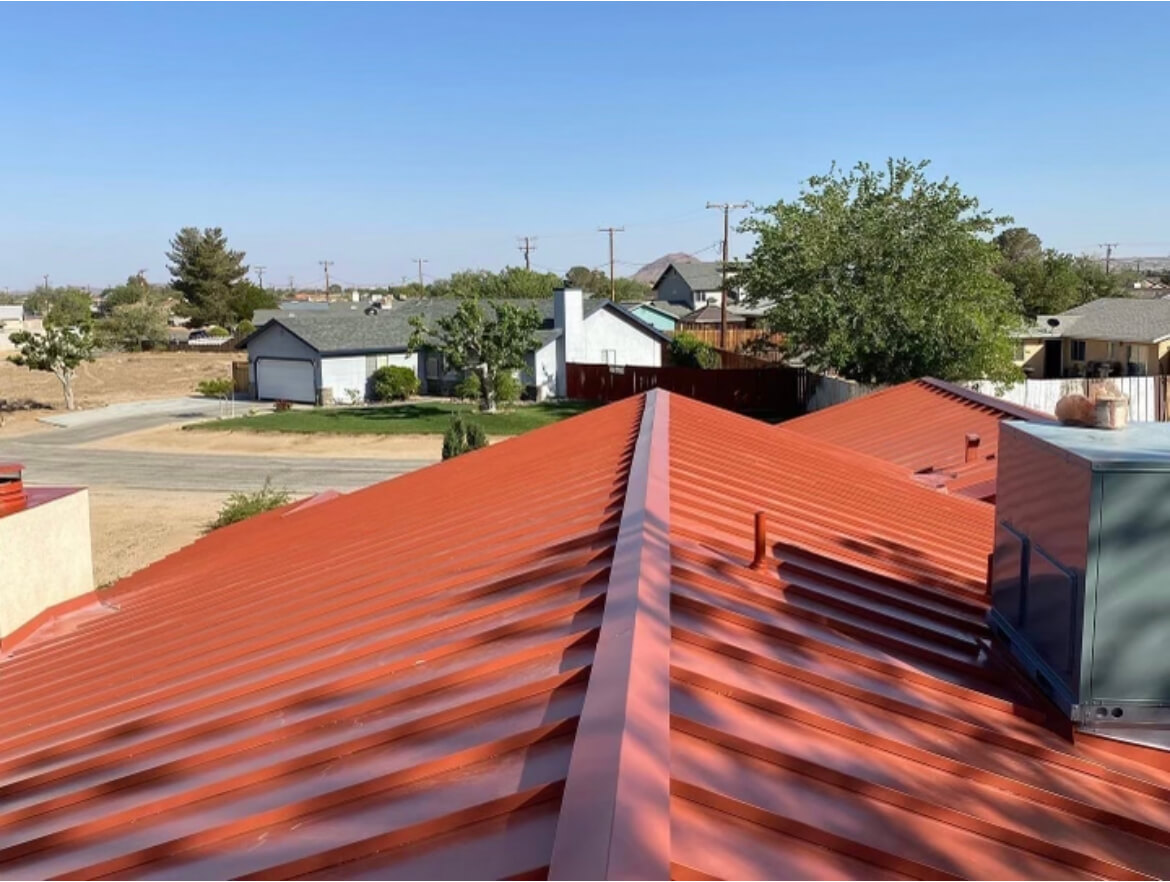
Pictures are helpful, but seeing completed work can provide additional confidence.
Ask for references and examples of projects using roofing materials and systems similar to what you are considering.
When possible, look closely at:
Panel alignment • valleys • ridge and hip details • wall transitions • penetrations • flashing • gutters • overall workmanship
Good metal roofing workmanship is often visible in the details.
7. Understand the Warranties
Ask the contractor to clearly explain the warranties associated with the project.
There may be separate warranties covering:
- Contractor workmanship
- Roofing materials
- Paint or coating finish
- Manufacturer system or installation warranties, when applicable
These warranties are not necessarily the same.
Ask who provides each warranty, what it covers, how long it lasts, and what conditions or exclusions apply.
8. California and Local Code Requirements
California roofing projects may be subject to state and local building, fire, energy-efficiency, and product requirements.
In the Los Angeles area, applicable requirements can include California Title 24 energy-efficiency standards, Cool Roof requirements, fire classifications, product approvals, permits, inspections and local building-code requirements, depending on the particular property and project.
The contractor should understand which requirements apply rather than assuming that one roofing specification is appropriate for every building.
9. Proper Roof and Attic Ventilation
Ventilation should be evaluated as part of the complete roofing system when applicable.
Proper attic ventilation can help manage heat and moisture, improve building performance, and contribute to the long-term performance of roofing components.
Ventilation requirements should be calculated and designed for the specific structure rather than simply adding vents without considering intake, exhaust and the existing building configuration.
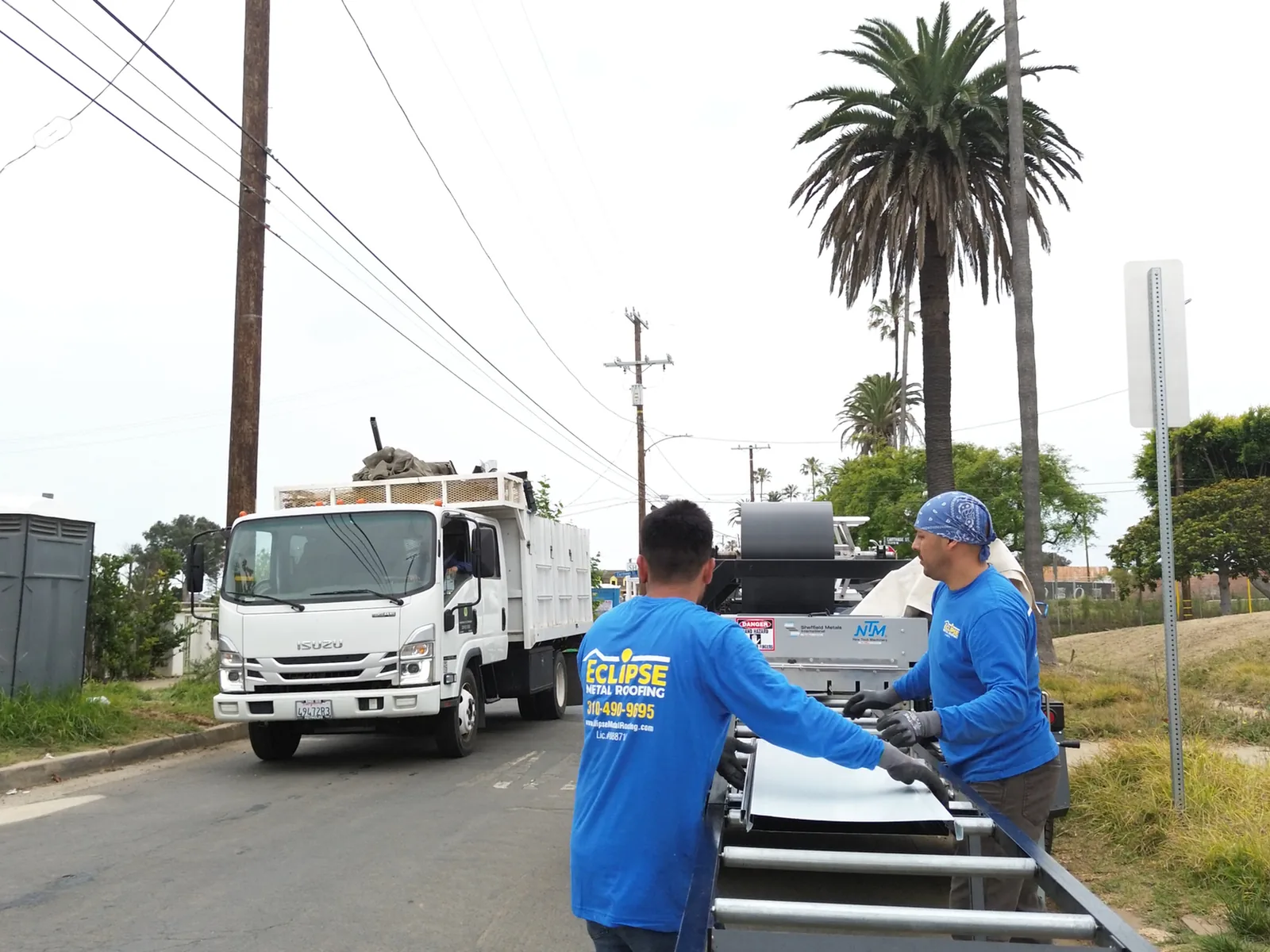
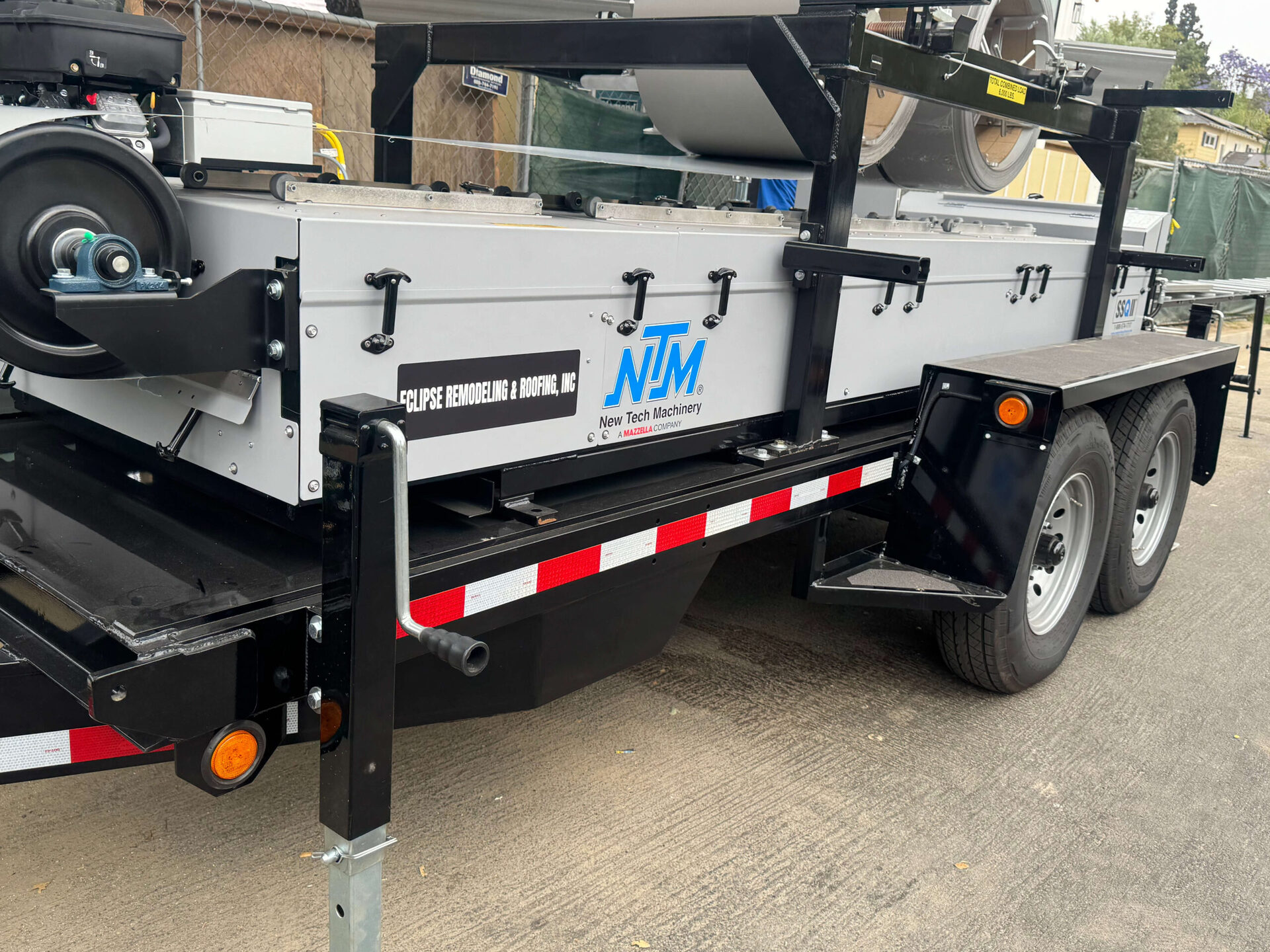
10. On-Site Metal Roof Panel Roll Forming
For standing seam metal roofing, ask whether the contractor has the capability to roll-form panels at the project site.
On-site roll forming can offer significant advantages, particularly for long architectural panels.
Panels can be manufactured to the required lengths at the jobsite, reducing unnecessary transportation and handling. This can help minimize the possibility of panels being scratched, bent or damaged during transportation and can reduce unnecessary field cuts and material waste.
11. Professional Sheet-Metal Fabrication Equipment
Metal roofing requires much more than a panel machine.
Professional fabrication equipment can contribute to consistency and precision.
A hydraulic-powered shear can provide clean, accurate sheet-metal cuts.
A computer-controlled CNC bending machine can produce highly consistent bends for roofing accessories and flashing components.
This is particularly valuable when fabricating drip edges, valleys, ridge and hip components, wall flashings, coping, fascia, chimney details and other custom accessories.
Instead of fabricating every component manually, computerized equipment can help produce repeatable pieces with consistent dimensions and bends.
12. Trained and Experienced Installation Crews
Even the best roofing materials and fabrication equipment cannot compensate for poor installation.
The installation crew should be familiar with the specific roofing system and understand proper handling, fastening, waterproofing, flashing and fabrication procedures.
Experienced supervision and trained installers are essential to producing a professional, durable metal roofing system.
The Bottom Line
When selecting a metal roofing contractor, do not make your decision based on price alone.
Compare licensing, experience, reputation, manufacturer training, completed projects, warranties, code knowledge, ventilation expertise, fabrication capabilities, professional equipment and the experience of the installation crew.
A metal roof can be a major long-term investment in a property. The contractor you select can be just as important as the material you select.
Important Disclaimer
This information is provided for general educational and informational purposes only and is intended as a general guideline for evaluating roofing contractors. It is not legal, engineering, architectural, building-code, licensing, warranty, or professional advice and should not be interpreted as a guarantee or representation regarding any particular contractor, roofing system, product, certification, organization, or project.
Licensing classifications, building codes, Title 24 requirements, manufacturer specifications, warranty requirements, fire requirements, permitting requirements, and local regulations may change and may vary depending on the location, building, roofing assembly, product, and scope of work.
Property owners should independently verify contractor licensing and credentials with the appropriate agencies and confirm applicable requirements with the local building department, manufacturer, design professional, or other appropriate authority before making a final decision.
No single factor—including licensing, reviews, certifications, professional memberships, equipment, years in business, or manufacturer affiliations—by itself guarantees workmanship, performance, code compliance, or the outcome of a roofing project.
Eclipse Metal Roofing
Eclipse Metal Roofing custom-fabricates every panel in-house and installs with our own crews—no subcontractors, ever. Nearly 20 years of metal roofing in Los Angeles, serving Bel-Air, Hollywood Hills, Pacific Palisades and the surrounding area. If you’re comparing contractors, our team is happy to answer any of the questions above—reach out here or call (310) 490-9695.